
THE FIRST PATCH: 1864 AND THE IDENTITY OF THE STANDARD
Why "In God We Trust" was the first Metadata Field

Every system has a BIOS—the basic instructions that define its identity. In the digital world, we call this the “Identity Layer.” In the world of American Numismatics, that layer was fundamentally rewritten 162 years ago today.
On April 8, 1864, the U.S. Mint was finalizing the launch of a strange new denomination: the Two-Cent Piece. But the “High-Resolution” legacy of that coin wasn’t its value; it was its Metadata. For the first time in history, the motto “In God We Trust” was struck into the metal.
The “Moral Data Patch”
Born during the nightmare of the Civil War, this wasn’t just a religious sentiment. It was a Standardization Strike. At a time when the nation was physically and economically de-resolving, Secretary of the Treasury Salmon P. Chase recognized that the currency needed an Unbroken Circuit of trust. He instituted a “Patch” to the national coinage BIOS—a universal field that would eventually be required on every piece of currency, from the humblest penny to the highest-denomination note.
The Phased Rollout (1864–1873)
After the 1864 Two-Cent piece proved the concept, the Mint began “migrating” the motto to other denominations.
The Migration: It appeared on the Nickel, the Quarter, the Half Dollar, and the Silver Dollar (the Morgan) throughout the 1860s and 70s.
The Coinage Act of 1873: This was the major “System Update.” It gave the Director of the Mint the authority to place the motto on any coin he deemed appropriate. This wasn’t a mandate yet, but it was the Framework for universal adoption.
The “Saint-Gaudens” Conflict (1907–1908)
This is the “Hardware Friction” phase. When Teddy Roosevelt commissioned Augustus Saint-Gaudens to redesign the $10 and $20 gold pieces, Roosevelt—a man of deep conviction—actually ordered the motto to be removed.
The Argument: Roosevelt felt that putting the name of God on a “Common Object” (money) that was used in bars, gambling dens, and for “low” purposes was a form of sacrilege.
The Backlash: The public and Congress disagreed. They saw the motto not as a decoration, but as a Verification Field. Without it, the coin felt “un-American.”
The Restore Point: Congress passed an act in June 1908 making the motto mandatory on all gold and silver coins. The “Patch” was now permanent.
The 1950s: The Cold War “Hard-Coding”
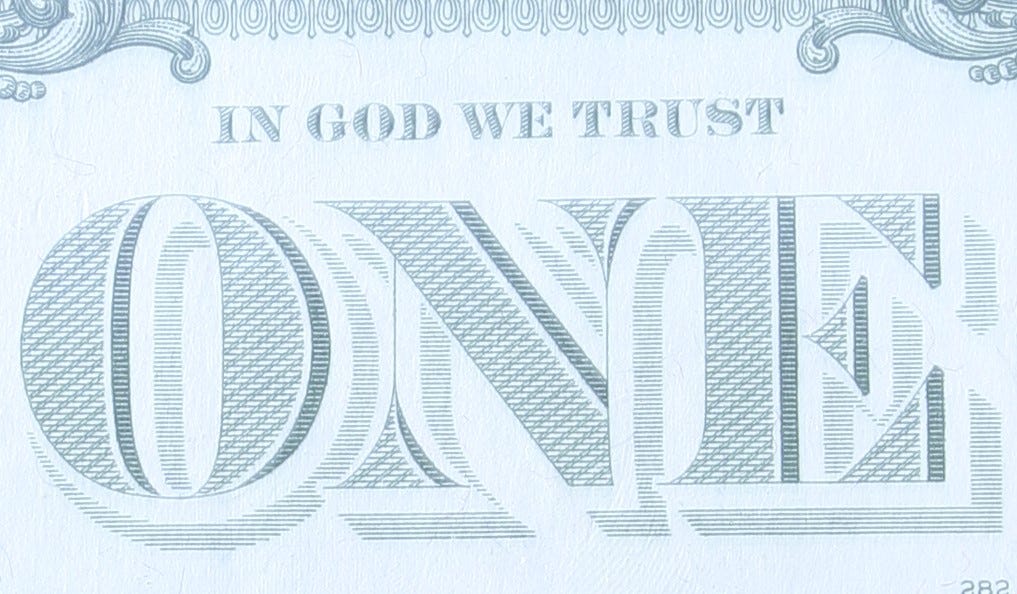
This is when the motto moved from a “Custom Patch” to the Primary BIOS. * 1955: During the height of the Cold War, Congress passed a law requiring the motto to appear on all U.S. currency (including paper notes).
1956: “In God We Trust” was officially declared the National Motto of the United States, replacing the unofficial E Pluribus Unum.
The Data Shift: This was the moment the motto stopped being a “numismatic feature” and became a Sovereign Identification Marker. It was used to distinguish the American “Substrate” from the “Atheistic” substrate of the Soviet Union.
Modern Day: The 2007 “Edge-Lettering” Incident
Even in the modern era, the “Governor” is still at work. When the Presidential $1 Coins were released in 2007, the motto was moved to the Edge of the coin (Edge-Lettering) to allow for more artistic luster on the face.
The Result: Thousands of coins were struck with “Missing Edges” (The “Godless Dollars”).
The Correction: The public reaction was so intense that the Mint was forced to move the motto back to the face of the coin in 2009. This proves that the motto is now an Immutable Field—if it’s not visible, the market perceives the data as “Corrupted.”

The “Masterworks” Forensic Conclusion:
From 1864 forward, the history books show that once a piece of Identity Data is successfully integrated into the Sovereign Standard, it becomes nearly impossible to remove.
It is no longer just “ink” or “metal”—it is the Proof of Provenance.
Grace and Luster.